
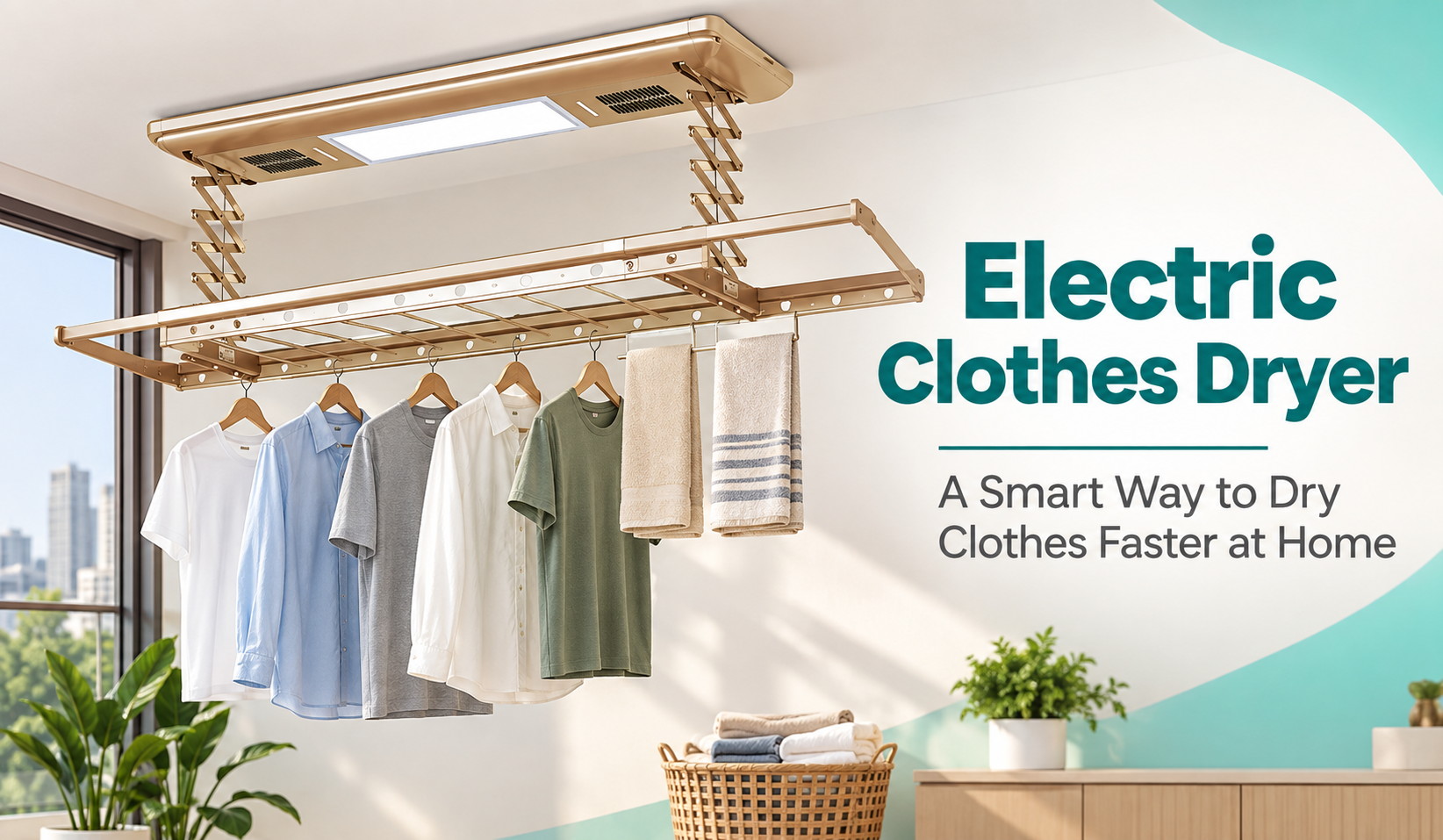

Electric Clothes Dryer: A Smart Way to Dry Clothes Faster at Home
Introduction
Drying clothes can become difficult when you live in an apartment, have limited balcony space, or experience frequent rain and humidity. Traditional clothes drying methods often depend on sunlight and airflow, which may not always be available. An electric clothes dryer offers a practical alternative by using controlled airflow and heat to help dry garments indoors.
For modern homes, choosing the right drying solution depends on available space, clothing quantity, drying speed, electricity usage, and convenience. While conventional drying stands and racks remain useful for everyday laundry, an electric clothes dryer can provide additional support when natural drying is slow or inconvenient.
What Is an Electric Clothes Dryer?
An electric clothes dryer is a powered appliance or drying system designed to remove moisture from clothes using heated air, circulating air, or a combination of both. Unlike a traditional drying rack that mainly depends on natural airflow, an electric clothes dryer uses electricity to create a controlled drying environment.
Depending on the design, some models may include heating elements, fans, timers, enclosed drying chambers, or dedicated hanging spaces. These features can make drying more convenient, particularly during monsoon weather or in homes where outdoor drying space is limited.
For households that frequently need dry clothes within a predictable timeframe, an electric clothes dryer can become a useful addition to their laundry setup.
Why Choose an Electric Clothes Dryer?
One of the main benefits of an electric clothes dryer is convenience. Natural drying can take several hours or longer depending on humidity, temperature, airflow, and sunlight. An electric system can provide a more controlled environment and reduce dependence on outdoor weather conditions.
Another advantage is indoor usability. If your home does not have a large balcony or terrace, an electric clothes dryer can provide an alternative way to manage laundry. It can be particularly useful for apartments, compact homes, hostels, and other spaces where outdoor drying is difficult.
An electric clothes dryer can also be useful during rainy seasons. Clothes may remain damp when there is insufficient sunlight, increasing the possibility of unpleasant odours. Controlled airflow and appropriate drying conditions can make the process more convenient.
However, the right model should always be selected according to your household requirements, available space, fabric types, capacity, and electricity consumption.
Electric Clothes Dryer vs Traditional Clothes Stand
A traditional clothes stand is simple, portable, and does not require electricity. It is suitable when you have adequate ventilation and enough time for clothes to dry naturally. A foldable or portable stand can also be convenient for balconies and rooms.
An electric clothes dryer, on the other hand, is designed for situations where faster or more controlled drying is required. It can be particularly useful when weather conditions make natural drying unreliable.
| Feature | Electric Clothes Dryer | Traditional Clothes Stand |
|---|---|---|
| Drying method | Powered airflow and/or heat | Natural air and sunlight |
| Electricity required | Yes | No |
| Weather dependency | Lower | Higher |
| Drying control | More controlled | Depends on surroundings |
| Indoor use | Depending on model | Generally easy |
| Space requirement | Depends on model | Usually flexible |
| Best suited for | Rainy, humid or time-sensitive drying | Regular natural drying |
| Maintenance | Requires product-specific maintenance | Generally minimal |
The choice does not always have to be one or the other. Many households can benefit from using a clothes drying stand for regular laundry while using an electric clothes dryer when faster drying is required.
If you already use a drying stand, adding an electric drying solution can provide greater flexibility without completely replacing your existing setup.
Important Features to Consider Before Buying
Before purchasing an electric clothes dryer, consider the features that are most relevant to your household.
Drying Capacity
Capacity should be one of the first considerations. A small household may need a compact model, while a larger family may require more hanging or drying space. Choosing an appropriate capacity prevents overloading and can help maintain effective airflow around garments.
Drying Method
Different products may use different drying technologies. Some rely primarily on heated air, while others combine heat with forced airflow. Understanding how the electric clothes dryer operates will help you choose a model suitable for your laundry requirements.
Size and Portability
Space is important, particularly for apartment living. A compact or portable design can be easier to store when not in use. If your laundry area is small, check the product dimensions before making a purchase.
Timer and Controls
A timer can make an electric clothes dryer more convenient by allowing users to control the drying duration. Simple controls can also make everyday operation easier.
Energy Consumption
Electricity usage should not be ignored. Before choosing an electric clothes dryer, check its wattage and expected operating time. A model that matches your household’s drying requirements can provide a better balance between convenience and energy use.
| Feature to Check | Why It Matters | What to Look For |
|---|---|---|
| Capacity | Determines how much laundry can be dried | Suitable capacity for your household |
| Power consumption | Affects electricity usage | Check wattage and operating duration |
| Drying technology | Influences drying performance | Suitable airflow and heating system |
| Size | Important for compact homes | Dimensions that fit your space |
| Timer | Helps control drying duration | Easy-to-use timer settings |
| Portability | Useful for apartments and small spaces | Lightweight or movable design |
| Maintenance | Helps maintain performance | Easy-to-clean components |
Is an Electric Clothes Dryer Suitable for Small Homes?
Yes, an electric clothes dryer can be particularly useful in small homes where outdoor drying space is restricted. Apartments may have limited balconies, while some homes may not have access to a terrace or dedicated laundry area.
A compact design can be placed in a suitable indoor location when required. However, adequate ventilation and the manufacturer’s installation and operating instructions should always be followed.
For smaller households, selecting a compact electric clothes dryer can help avoid purchasing a model with more capacity than necessary.
Electric Clothes Dryer for Monsoon and Humid Weather
Monsoon weather can make laundry management challenging. Rain, cloudy skies, and high humidity can significantly slow natural drying. Clothes may need to remain on a rack for extended periods before becoming completely dry.
An electric clothes dryer can provide an additional drying option during these conditions. Instead of depending entirely on sunlight, users can rely on a controlled drying process when natural conditions are unfavourable.
This can be particularly valuable for frequently used items such as school uniforms, office clothes, towels, and everyday garments.
How to Use an Electric Clothes Dryer Efficiently
Getting better results does not always mean using the dryer for the longest possible duration. Start by following the manufacturer’s instructions and avoid overloading the drying space.
Leave enough room between garments so that air can circulate properly. Separate heavier garments from lighter items when appropriate, and select a suitable drying duration based on the fabric and moisture level.
Regular maintenance is also important. Clean the relevant filters, vents, or components according to the manufacturer’s instructions. Proper maintenance can help your electric clothes dryer operate efficiently over time.
Avoid placing unsuitable fabrics inside the appliance unless the manufacturer specifically states that they are compatible.
Electric Clothes Dryer vs Drying Rack: Which One Should You Choose?
A drying rack remains a practical choice for households that have sufficient sunlight, ventilation, and time. It requires no electricity and can be folded or stored when not needed.
An electric clothes dryer becomes more useful when drying speed, weather independence, and indoor convenience are important priorities.
Instead of focusing only on which option is better, consider your daily laundry routine. If natural drying works well for most of the year, a conventional drying stand may be sufficient. If you regularly struggle with rain, humidity, or limited space, an electric clothes dryer may offer greater convenience.
Conclusion
Choosing the right laundry solution depends on your available space, drying requirements, household size, and local weather conditions. An electric clothes dryers can provide a convenient way to manage laundry when natural drying is slow or unreliable.
From compact apartments to busy family homes, an electric clothes dryer can complement traditional drying stands and racks by providing a more controlled drying option. Before buying, compare capacity, drying technology, size, controls, energy consumption, and ease of maintenance.
If your priority is convenient clothes drying throughout different seasons, an electric clothes dryer can be considered as part of a practical modern laundry setup.
CTA: Contact Craft Home India
Looking for a practical clothes drying solution for your home? Connect with Craft Home India to explore suitable drying products and discuss your requirements.
CONTACT US
📲 +91 982 003 2877
📲 +91 702 122 0218
📍 Craft Home India, Office No. 175, First Floor, Raja Industrial Estate, Mulund West, Mumbai, Maharashtra 400080
Whether you are looking for a traditional drying stand, hanger-based solution, or an electric clothes dryer, the Craft Home India team can help you explore options suited to your space and laundry requirements.
FAQs
1. What is an electric clothes dryer?
An electric clothes dryer is a powered drying appliance or system that uses electricity to circulate air, generate heat, or both to help remove moisture from clothes. Depending on the model, it may include timers, fans, heating elements, or enclosed drying spaces.
2. Is an electric clothes dryer useful during the monsoon?
Yes. An electric clothes dryer can be useful during the monsoon because it provides an alternative to natural drying when rain, humidity, or limited sunlight makes conventional drying slower.
3. Does an electric clothe dryer consume a lot of electricity?
Electricity consumption depends on the model’s wattage, drying duration, and frequency of use. Check the manufacturer’s power rating and operating instructions before purchasing an electric clothes dryer.
4. Can I use an electric clothes dryer in an apartment?
Many compact drying solutions are designed for indoor or apartment use, but suitability depends on the specific product. Always check the manufacturer’s requirements for placement, ventilation, electrical connections, and safe operation before using an electric clothes dryer indoors.
5. Is an electric clothes dryer better than a traditional drying stand?
They serve different purposes. A traditional drying stand is simple and does not require electricity, while an electric clothes dryer can provide controlled drying when natural drying is inconvenient. Many households can use both depending on weather and laundry requirements.
6. How do I choose the right electric clothe dryer?
Consider drying capacity, available space, drying technology, power consumption, timer controls, portability, fabric compatibility, and maintenance requirements. Choosing an electric clothes dryer based on your actual laundry needs can provide better convenience and value.