
Introduction
Drying clothes can become a daily challenge when you live in a compact apartment, have limited balcony space, or experience frequent rain and humidity. Traditional clotheslines may not always provide enough drying capacity, while large drying appliances can require considerable space. A portable clothes dryer offers a practical solution for households looking for convenient, flexible, and space-efficient clothes drying.
A portable clothes dryer can be particularly useful when outdoor drying is not possible. Instead of depending completely on sunlight, homeowners can use a compact drying solution indoors or move it between suitable areas of the home. This flexibility makes it an attractive option for apartments, small homes, rented properties, and families with changing laundry requirements.
Modern households can also combine different drying solutions depending on the season. A foldable clothes drying stand can be used when sunlight is available, while a portable clothes dryer can provide additional drying support during rainy or humid weather.
What Is a Portable Clothes Dryer?
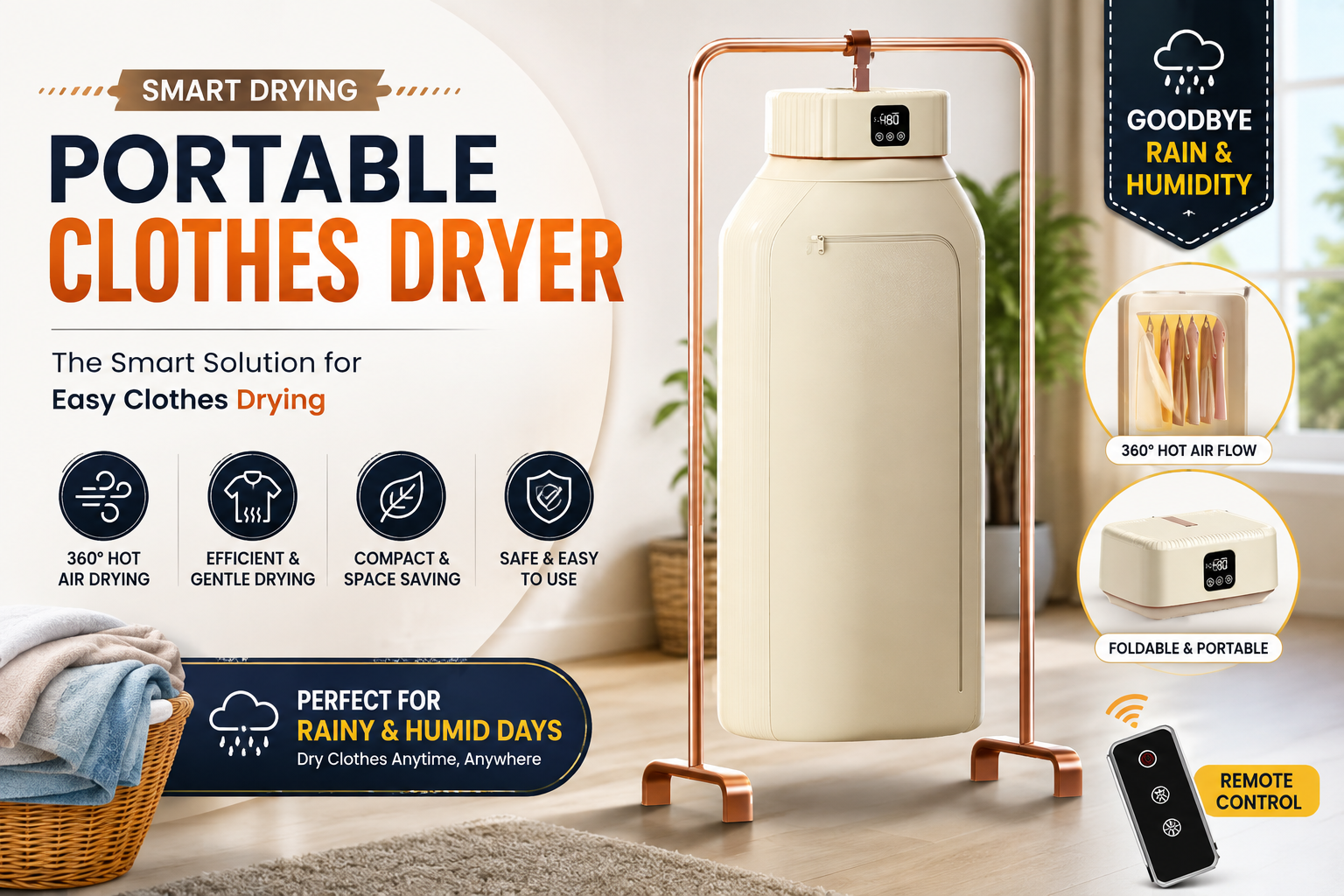
A portable clothes dryer is a compact clothes-drying solution designed to be moved, stored, or used in different areas according to household requirements. Unlike permanently installed drying systems, portable models provide greater flexibility.
The exact design can vary. Some products use warm air and controlled airflow, while others combine hanging systems with electric drying technology. Before purchasing, it is important to check the product specifications, capacity, power requirements, and recommended garment types.
The biggest advantage of a portable clothes dryer is convenience. You can use it when weather conditions make outdoor drying difficult and store it when it is no longer required.
Why Are Portable Dryers Useful for Modern Homes?
Urban homes often have limited laundry areas. Balconies may be narrow, utility rooms may be small, and indoor floor space may already be occupied by furniture. A portable clothes dryer can help overcome these limitations by providing a flexible drying option without requiring a permanent installation.
It can also complement an indoor clothes drying rack when additional drying capacity is required.
Why Choose a Portable Clothes Dryer?
Choosing a portable clothes dryer can provide several practical benefits for households that need greater flexibility in their laundry routine.
Easy to Move
One of the main advantages of a portable clothes dryer is mobility. Depending on the design and weight, it can be moved to an appropriate location when required.
During sunny weather, you may prefer using a balcony or other well-ventilated area. During rainy weather, the dryer can be used indoors according to the manufacturer’s instructions.
Saves Space
A portable clothes dryer can be a practical choice for apartments and compact homes. When selecting a model, consider its dimensions and storage requirements.
For households with extremely limited floor space, a space saving clothes drying rack or wall-mounted solution can also complement a portable drying system.
Useful During Rainy Weather
Rain can make natural clothes drying unpredictable. Clothes may remain damp for longer periods because of high humidity and limited sunlight.
A portable clothes dryer can provide an alternative when outdoor drying is inconvenient. It can be especially helpful during the monsoon season when households need a reliable indoor drying option.
Convenient for Smaller Laundry Loads
Not every laundry load needs a large drying appliance. A portable clothes dryer can be useful for smaller batches, frequently washed garments, children’s clothing, or clothes that need additional drying.
Using an appropriately sized drying solution can make the laundry routine more manageable without requiring a large permanent appliance.
Portable Clothes Dryer vs Other Drying Solutions
Different drying systems serve different household needs. A portable clothes dryer provides mobility, while fixed and foldable racks focus primarily on natural air drying.
| Drying Solution | Best For | Portability | Space Saving | Electricity |
|---|---|---|---|---|
| Portable Clothes Dryer | Flexible indoor drying | Excellent | Excellent | Model dependent |
| Foldable Clothes Drying Stand | Everyday air drying | Excellent | Excellent | No |
| Wall Mounted Cloth Dryer | Permanent compact drying | Low | Excellent | Usually no |
| Ceiling Cloth Dryer | Maximum vertical space use | Low | Excellent | Usually no |
| Electric Clothes Dryer | Faster controlled drying | Low to moderate | Moderate | Yes |
| Indoor Clothes Drying Rack | Everyday indoor drying | High | Good | No |
The best option depends on your home’s layout, laundry volume, weather conditions, and drying preferences.
Portable Clothes Dryer for Small Spaces
A portable clothes dryer can be especially beneficial in small apartments and homes where every square foot matters.
Instead of dedicating a permanent area to a large drying appliance, homeowners can select a compact model that fits their available space. After use, the appliance can potentially be moved or stored according to its design.
Clothes Drying Stand for Small Spaces
A clothes drying stand for small spaces is another practical option for households that prefer natural air drying. Foldable and multi-level designs can provide useful drying capacity without requiring a large floor footprint.
A portable clothes dryer can complement such a stand by providing additional drying support during unfavorable weather.
Clothes Drying Stand for Balcony
Balconies are popular areas for drying clothes because they often provide sunlight and natural airflow. A clothes drying stand for balcony can maximize this available space.
When weather conditions are unsuitable, a portable clothes dryer can provide an indoor alternative, allowing homeowners to maintain their laundry routine without relying completely on outdoor conditions.
Portable Clothes Dryer for Rainy Season
Rainy weather creates several challenges for clothes drying. Continuous rain, high humidity, and reduced sunlight can significantly slow down natural drying.
Knowing how to dry clothes during rainy season can help households avoid unnecessary delays. One practical approach is to combine ventilation with an appropriate drying rack or drying appliance.
A portable clothes dryer can be useful during this period because it provides an alternative to outdoor drying. However, proper ventilation and adherence to the manufacturer’s operating instructions remain important when using any indoor drying appliance.
Tips for Drying Clothes During Rain
Keep garments properly spaced rather than placing them tightly together. Good airflow helps moisture escape more effectively.
Use a fan or natural ventilation where appropriate. Avoid overcrowding an indoor clothes drying rack because closely packed garments can take longer to dry.
If you use a portable clothes dryer, follow the recommended load capacity and drying settings. Different fabrics may require different drying conditions, so always check garment-care labels.
Portable Clothes Dryer vs Electric Clothes Dryer
An electric clothes dryer is designed to use electrical power to generate controlled heat and airflow. A portable clothes dryer may also use electricity, depending on its design, but the defining feature is its compact and movable format.
| Feature | Portable Clothes Dryer | Electric Clothes Dryer |
|---|---|---|
| Portability | High | Usually lower |
| Space Requirement | Low to moderate | Moderate to high |
| Indoor Use | Often suitable | Often suitable |
| Storage Flexibility | High | Low |
| Capacity | Usually compact to moderate | Moderate to high |
| Best For | Flexible drying | Regular high-volume drying |
If portability and storage are major priorities, a portable clothes dryer may be more appropriate. If your household regularly handles large laundry loads, a higher-capacity electric dryer may be worth considering.
Other Space-Saving Clothes Drying Options
A portable clothes dryer is not the only solution for homes with limited space. Combining different drying methods can provide greater flexibility throughout the year.
Foldable Clothes Drying Stand
A foldable clothes drying stand can be opened when laundry needs to be dried and folded away afterward. It is a useful choice for households that prefer natural drying.
Wall Mounted Cloth Dryer
A wall mounted cloth dryer uses vertical wall space instead of occupying a large area of the floor. It can be particularly useful in narrow balconies, utility areas, and compact rooms.
Unlike a portable clothes dryer, a wall-mounted system generally requires installation and remains in one location.
Ceiling Cloth Dryer
A ceiling cloth dryer makes use of overhead space and can help keep floors clear. It may be suitable for balconies, utility areas, and other locations where ceiling installation is practical.
Stainless Steel Clothes Drying Stand
A stainless steel clothes drying stand is a popular option for natural air drying. Stainless steel can offer strength and resistance to moisture, making it suitable for regular household use.
A portable clothes dryer and stainless steel drying stand can serve different purposes and may be used together depending on weather and laundry requirements.
How to Choose the Right Portable Clothes Dryer
Before purchasing a portable clothes dryer, consider several factors to ensure the product matches your household needs.
Check the Capacity
Consider the amount of laundry you normally dry at one time. A compact household may require a smaller model, while larger families may need greater capacity.
Do not exceed the manufacturer’s recommended load. Overloading can restrict airflow and affect drying performance.
Consider Available Space
Measure the area where you plan to operate or store the portable clothes dryer. Make sure there is adequate clearance around the appliance and that the location meets the manufacturer’s requirements.
For very small rooms, a space saving clothes drying rack or wall-mounted option may be more practical.
Check Power Requirements
If the portable clothes dryer is electrically powered, check its voltage, wattage, operating requirements, and safety instructions before purchase.
Understanding energy consumption can also help you estimate ongoing operating costs.
Look at Drying Settings
Different garments have different care requirements. If the dryer provides multiple temperature or drying modes, select the appropriate setting according to the garment label and manufacturer’s recommendations.
Delicate fabrics should not be exposed to unsuitable temperatures or drying conditions.
Consider Portability and Storage
The key benefit of a portable clothes dryer is flexibility. Check its dimensions, weight, folding or storage mechanism, and ease of movement.
A product that is easy to store can be particularly valuable in compact apartments.
How to Use a Portable Clothes Dryer Efficiently
Correct usage can improve drying performance and help protect garments. Start by separating clothes according to fabric type and care requirements.
Avoid overloading the portable clothes dryer. Garments need sufficient airflow for moisture to escape efficiently.
If the dryer is designed for indoor use, operate it according to the manufacturer’s ventilation and safety recommendations. Keep the appliance away from unsuitable locations and ensure that electrical connections are safe.
Regular cleaning and maintenance should also be performed according to the manufacturer’s instructions.
Why Craft Home India?
Craft Home India provides practical home utility solutions designed for modern Indian households. When choosing a portable clothes dryer, homeowners need a product that fits their available space and everyday laundry requirements.
Along with portable solutions, households may consider a foldable clothes drying stand, wall mounted cloth dryer, ceiling cloth dryer, or stainless steel clothes drying stand depending on their home layout.
The right combination of drying products can provide flexibility throughout different seasons. Natural air drying can be used when weather conditions are favorable, while a portable clothes dryer can provide additional support when outdoor drying becomes difficult.
Conclusion
A portable clothes dryer can be a practical solution for modern households dealing with limited space, rainy weather, high humidity, or unpredictable drying conditions. Its compact and flexible nature makes it suitable for apartments, small homes, and households that need additional drying capacity.
Whether you combine a portable clothes dryer with a foldable clothes drying stand, indoor clothes drying rack, or clothes drying stand for balcony, the right setup can make everyday laundry more convenient.
Before purchasing, consider capacity, size, power requirements, drying settings, portability, and storage. Choosing a drying solution that matches your household’s requirements can help you maintain an efficient laundry routine throughout the year.
Contact Us
Looking for practical clothes drying solutions for your home?
Contact Craft Home India to explore suitable home utility products and find a drying solution that matches your space and everyday requirements.
Craft Home India
Office Address:
Office No. 175, First Floor, Raja Industrial Estate, Mulund West, Mumbai, Maharashtra 400080
Contact Information:
+91 982 003 2877
+91 702 122 0218
Website: https://crafthomeindia.in/
Frequently Asked Questions
1. What is a portable clothes dryer?
A portable clothes dryer is a compact drying solution designed to provide flexibility and convenient clothes drying. Depending on the model, it may use warm air, airflow, or other drying methods.
2. Is a portable clothes dryer useful during the rainy season?
Yes. A portable clothes dryer can provide an alternative drying option when rain, humidity, and limited sunlight make outdoor drying difficult.
3. Can I use a portable clothes dryer in a small apartment?
A portable clothes dryer can be suitable for compact homes when its dimensions, ventilation requirements, and operating conditions are compatible with the available space.
4. Is a portable clothes dryer better than a drying rack?
Both have different advantages. A drying rack uses natural airflow and does not require electricity, while a portable clothes dryer can provide additional convenience when natural drying is slow or unavailable.
5. What should I consider before buying a portable clothes dryer?
Consider capacity, dimensions, power consumption, drying settings, portability, storage requirements, and the types of garments you plan to dry.
6. Can a portable clothes dryer replace a balcony drying stand?
It can provide an alternative when outdoor drying is inconvenient, but a balcony drying stand remains useful when sunlight and natural airflow are available. Many households can benefit from having both options.