
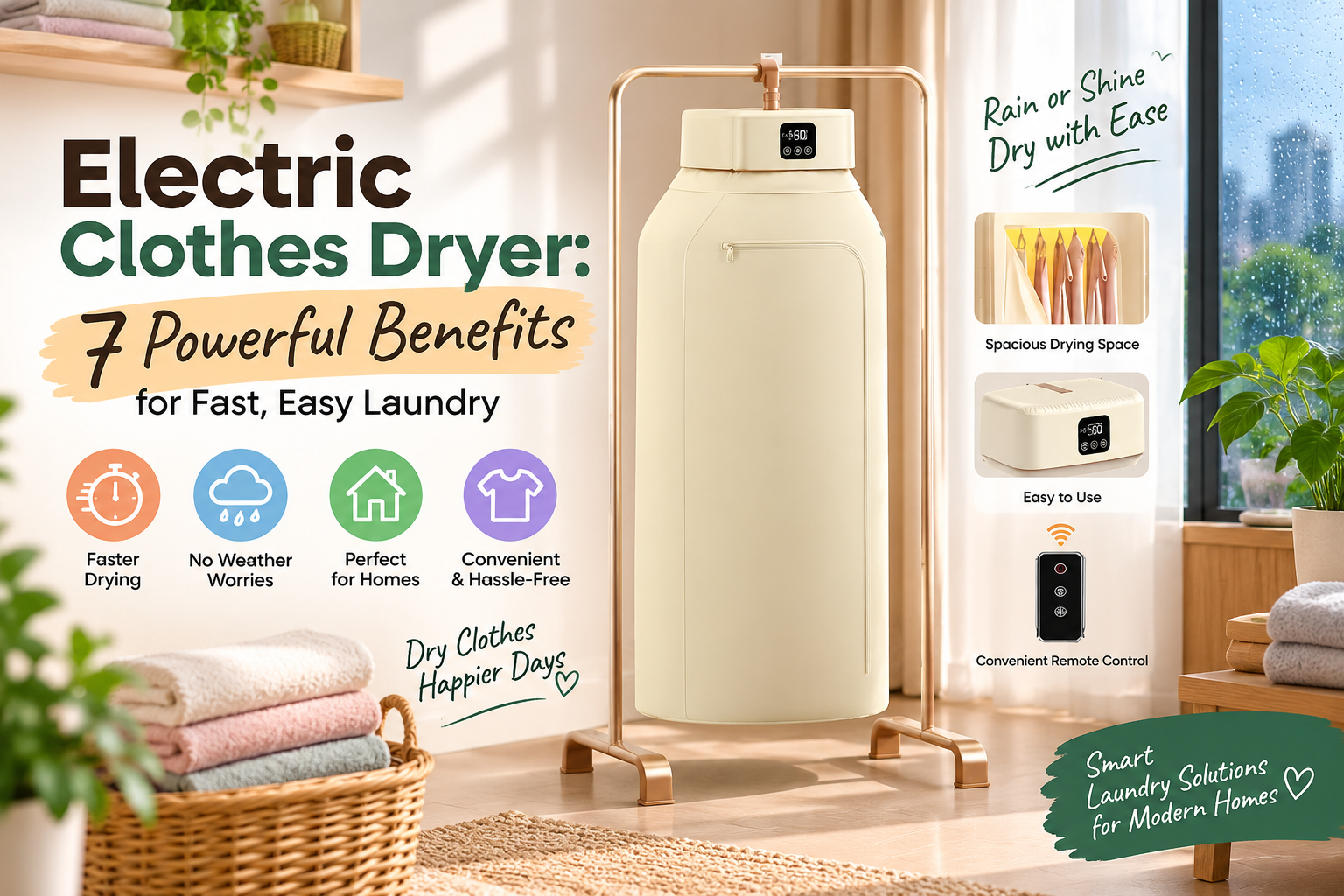
Why an Electric Clothes Dryer Is Useful for Modern Homes
Drying clothes can be one of the most frustrating parts of doing laundry, especially during the rainy season, winter, or in homes with limited outdoor space. When sunlight and natural airflow are not enough, an electric clothes dryer can provide a convenient way to make the drying process faster and more manageable.
Modern homes often require flexible laundry solutions that fit into apartments, compact utility areas, balconies, and indoor spaces. An electric clothes dryer can help reduce dependence on weather conditions while giving households a practical option for handling wet clothes when conventional drying becomes difficult.
However, an electric dryer is not the only solution available. Depending on your home layout and laundry requirements, you may also consider a cloth dryer for balcony, balcony clothes drying stand, foldable clothes drying stand, or wall mounted cloth dryer. Understanding the differences can help you choose the right drying solution for your home.
What Is an Electric Clothes Dryer?
An electric clothes dryer is a powered laundry appliance or drying system designed to help remove moisture from clothes using electrically powered drying mechanisms. Depending on the model, the drying process may involve heated air, circulating air, or a combination of airflow and controlled temperature.
The main advantage is convenience. Instead of waiting for sunlight or favorable weather, an electric clothes dryer can provide a more controlled drying environment.
This can be particularly useful for families that wash clothes frequently. It can also be helpful when outdoor drying is not practical because of rain, high humidity, pollution, or limited balcony space.
Before purchasing one, it is important to consider the available installation area, drying capacity, energy consumption, operating requirements, and the type of garments you usually wash.
7 Powerful Benefits of an Electric Clothes Dryer
1. Faster Drying When Weather Is Unpredictable
One of the biggest reasons homeowners consider an electric clothes dryer is the ability to dry laundry without depending entirely on weather conditions.
Rainy days can make traditional outdoor drying difficult. Even when clothes are placed on a balcony, high humidity can slow evaporation significantly. An electric drying solution can provide an alternative when natural drying is taking too long.
This makes it especially useful for households that need dry clothes within a predictable timeframe.
2. Convenient Indoor Laundry Drying
An electric clothes dryer can be useful when outdoor drying space is unavailable. Apartment residents may have small balconies or no dedicated outdoor laundry area at all.
In these situations, indoor drying becomes necessary. A suitable electric drying solution can complement an indoor clothes drying rack, particularly during periods of heavy rain or poor weather.
The combination of organized hanging space and controlled drying can make laundry management more convenient.
3. Useful During the Rainy Season
Rain is one of the biggest challenges for households that rely on natural drying. Clothes may remain damp for extended periods, resulting in an unpleasant musty smell if they are not dried properly.
An electric clothes dryer can become particularly valuable during such periods because it reduces dependence on sunlight and outdoor airflow.
For homes where laundry needs to be completed regularly despite unpredictable weather, having an electric drying option can provide greater flexibility.
4. Helps Manage Frequent Laundry
Large families often deal with multiple loads of laundry every week. When drying space is limited, wet garments can quickly pile up.
An electric clothes dryer can help manage drying when conventional drying areas are already occupied. It can be used alongside a balcony clothes drying stand or other drying equipment to increase overall flexibility.
Instead of waiting for one batch of clothing to dry before starting another, households may be able to organize their laundry more efficiently.
5. Works Well for Compact Homes
Space is an important consideration for apartment living. A large traditional dryer may not be suitable for every home.
Depending on the model, an electric clothes dryer can provide a dedicated drying solution while fitting into a carefully planned laundry area. Compact and portable options can offer even greater flexibility.
A portable clothes dryer may be particularly useful for renters, smaller households, or people who need to move their drying equipment between rooms.
6. Reduces Dependence on Sunlight
Sunlight is helpful for natural drying, but it is not consistently available throughout the year. Cloudy weather, monsoon conditions, and shaded balconies can make drying considerably slower.
An electric clothes dryer provides another option when sunlight is insufficient. This does not mean natural drying needs to be eliminated. Instead, an electric system can supplement traditional drying methods whenever conditions are unfavorable.
7. Offers Greater Laundry Convenience
Perhaps the biggest benefit is convenience. Modern laundry routines are increasingly focused on saving time and reducing household effort.
An electric clothes dryer can make the drying stage easier to manage by providing a controlled drying option whenever required.
For busy households, this convenience can make a noticeable difference, particularly when clothes need to be dried quickly.
Electric Clothes Dryer vs Cloth Dryer for Balcony
A cloth dryer for balcony is a practical choice for homes with adequate balcony space and access to natural airflow. It does not require electricity and can be used for everyday air drying.
An electric clothes dryer, in comparison, provides a powered drying method that can be especially useful when weather conditions are unfavorable.
| Feature | Electric Clothes Dryer | Cloth Dryer for Balcony |
|---|---|---|
| Power required | Yes | No |
| Weather dependence | Low | Moderate to high |
| Indoor use | Suitable depending on model | Limited by ventilation and design |
| Drying speed | Generally faster | Depends on airflow and humidity |
| Installation | Model dependent | Model dependent |
| Best for | Controlled drying | Natural air drying |
The right choice depends on whether your priority is faster controlled drying or simple natural air drying.
Electric Clothes Dryer vs Foldable Clothes Drying Stand
A foldable clothes drying stand is an excellent option for people who want flexibility without using electricity. It can be opened when laundry needs to be dried and folded away afterward.
An electric clothes dryer is better suited to households looking for powered drying and greater independence from weather conditions.
| Feature | Electric Clothes Dryer | Foldable Clothes Drying Stand |
|---|---|---|
| Electricity | Required | Not required |
| Portability | Depends on model | Usually high |
| Storage | Model dependent | Easy when folded |
| Weather dependence | Lower | Higher |
| Drying method | Powered | Natural airflow |
| Space efficiency | Varies | Generally good |
For simple everyday drying, a foldable stand may be sufficient. For faster drying during difficult weather, an electric clothes dryer can provide an additional advantage.
Wall Mounted Cloth Dryer or Electric Clothes Dryer?
A wall mounted cloth dryer is designed to maximize available wall space. It can be particularly useful in small balconies, utility rooms, and compact homes.
Because it does not typically rely on electricity, it offers an economical approach to regular air drying. However, drying speed depends on ventilation, humidity, and weather conditions.
An electric clothes dryer provides a different approach by reducing dependence on natural conditions. Some households may benefit from having both options.
A wall-mounted system can handle normal laundry on sunny or well-ventilated days, while an electric drying solution can be used when faster or weather-independent drying is needed.
Ceiling Cloth Dryer vs Electric Clothes Dryer
A ceiling cloth dryer is another space-saving option that uses overhead space rather than the floor. It can be particularly useful in balconies or utility areas where wall and floor space are limited.
Ceiling-mounted solutions are generally intended for natural drying, while an electric clothes dryer offers powered drying.
| Feature | Ceiling Cloth Dryer | Electric Clothes Dryer |
|---|---|---|
| Uses ceiling space | Yes | Model dependent |
| Electricity | Usually no | Yes |
| Natural airflow | Yes | Not necessarily |
| Weather dependence | Moderate | Lower |
| Space saving | Excellent | Varies |
| Ideal use | Regular air drying | Faster controlled drying |
Your choice should depend on your available installation space and whether you prioritize natural or powered drying.
How to Choose the Right Electric Clothes Dryer
Choosing an electric clothes dryer requires careful consideration of your household needs. Start by evaluating how much laundry you normally wash and how frequently you need clothes to dry quickly.
Capacity is particularly important for larger families. A dryer that is too small may require multiple drying cycles, reducing the convenience you expected.
You should also consider the available space. Measure the area before purchasing and ensure there is adequate ventilation and access to a suitable electrical connection where required.
Energy consumption is another important factor. Since the dryer uses electricity, understanding its operating requirements can help you make a more practical long-term decision.
Finally, consider the types of clothes you normally wash. Different fabrics may have different drying requirements, so always follow the manufacturer’s instructions for using the appliance safely and appropriately.
How to Use an Electric Clothes Dryer Efficiently
Avoid placing excessively wet clothes into the dryer if your washing machine offers an effective spin cycle. Removing excess water first can reduce the moisture that needs to be removed during drying.
Do not overload the drying system. Overcrowding can restrict airflow and may result in uneven drying.
Separate heavier garments from lighter fabrics when appropriate. Towels, denim, and thick clothing generally retain more moisture than lightweight garments.
Regular maintenance is also important. Keep the appliance clean according to the manufacturer’s instructions and inspect ventilation areas where applicable.
Can You Combine Electric and Natural Drying?
Yes. Many households can benefit from using different drying solutions according to weather and laundry requirements.
For example, a cloth dryer for balcony can be used on sunny days, while an electric clothes dryer can provide an alternative during rainy weather.
A portable clothes dryer can offer additional flexibility, while a wall mounted cloth dryer can provide permanent drying space without occupying much floor area.
This combination allows homeowners to select the most convenient drying method rather than relying on a single solution throughout the year.
Why Choose Craft Home India?
Craft Home India provides practical clothes-drying solutions designed to meet the needs of modern Indian homes. Choosing the right laundry equipment is not simply about buying the largest or most advanced option. It is about finding a solution that fits your available space, drying requirements, lifestyle, and everyday routine.
Whether you need a balcony drying solution, foldable system, wall-mounted option, ceiling dryer, or complementary electric clothes dryer, planning your laundry space carefully can make everyday drying more organized and convenient.
Conclusion
An electric clothes dryer can be a powerful addition to a modern laundry setup, particularly for households dealing with unpredictable weather, limited outdoor space, frequent laundry, or the need for faster drying.
While alternatives such as a cloth dryer for balcony, balcony clothes drying stand, foldable clothes drying stand, wall mounted cloth dryer, ceiling cloth dryer, and indoor clothes drying rack can provide effective natural drying, an electric solution offers greater independence from sunlight and weather conditions.
The best approach depends on your home’s space, laundry volume, budget, and drying preferences. By choosing the right combination of drying solutions, you can make laundry more efficient while keeping your home organized.
CONTACT US
Looking for practical clothes-drying solutions for your home?
Craft Home India
📲 +91 982 003 2877
📲 +91 702 122 0218
📍 Craft Home India
Office No. 175, First Floor, Raja Industrial Estate,
Mulund West, Mumbai, Maharashtra 400080
Visit https://crafthomeindia.in/ to explore practical laundry and clothes-drying solutions for modern homes.
Frequently Asked Questions
1. What is an electric clothes dryer?
An electric clothes dryer is a powered drying appliance or system designed to remove moisture from clothes using electrically powered drying mechanisms.
2. Is an electric clothes dryer useful during the rainy season?
Yes. It can be particularly useful during rainy and humid weather because it reduces dependence on sunlight and outdoor drying conditions.
3. Can I use an electric clothes dryer indoors?
Many models are designed for indoor use, but installation and operating requirements vary. Always follow the manufacturer’s instructions regarding ventilation, placement, and electrical safety.
4. Is a portable clothes dryer suitable for small homes?
A portable clothes dryer can be useful for compact homes because it may offer greater flexibility than a larger permanent appliance. Check its capacity and dimensions before purchasing.
5. Is a wall mounted cloth dryer better than an electric clothes dryer?
They serve different purposes. A wall mounted cloth dryer is excellent for space-saving natural air drying, while an electric clothes dryer can provide greater convenience when faster or weather-independent drying is required.
6. Can I use a balcony clothes drying stand with an electric dryer?
Yes. They can complement each other. A balcony clothes drying stand can handle regular natural drying, while an electric system can be used when weather conditions make outdoor drying difficult.
7. Does an electric clothes dryer consume a lot of electricity?
Electricity consumption depends on the specific model, operating time, drying method, and energy efficiency. Check the manufacturer’s specifications before making a purchase.
8. What should I consider before buying an electric clothes dryer?
Consider capacity, available space, power requirements, operating cost, drying requirements, installation needs, and the types of clothes you regularly wash.